
Enhancing Scientific Integrity
A National Academies workshop, new research on phones in schools, plus an interview with Team Scientist Leslie John on the power of oversharing

BCFG Hosted a “Watch Party” at Penn for a National Academies Workshop on Enhancing Integrity in the Social and Behavioral Sciences
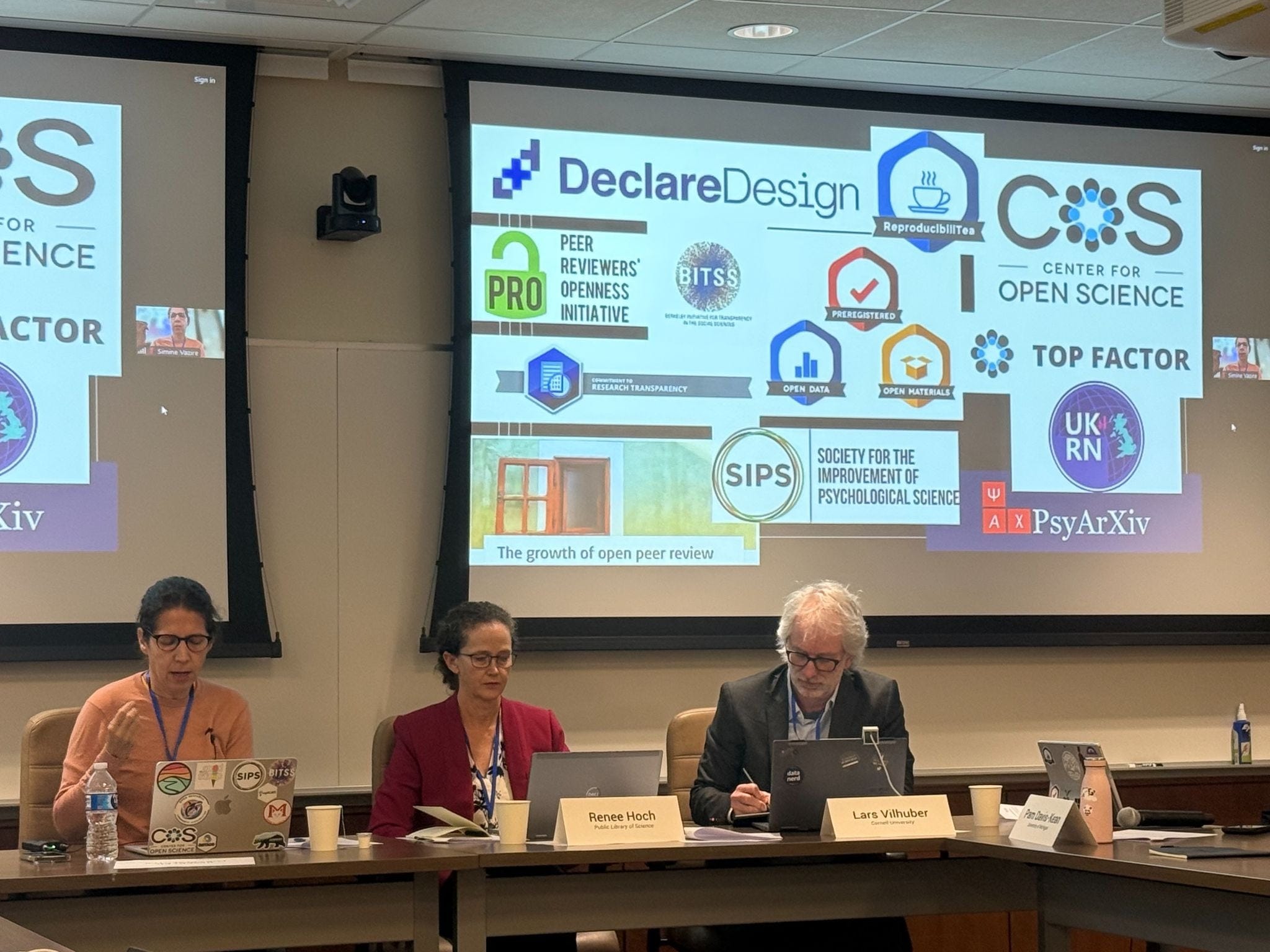
BCFG Co-Director Katy Milkman co-organized a two-day National Academies workshop on enhancing transparency, accountability, and integrity in social and behavioral science research. The virtual event convened leading experts in fraud detection, replication, academic journal reform, statistical methods, and research ethics to discuss current challenges and opportunities for improving scientific practice. To complement the workshop, BCFG hosted a “watch party” at Penn, bringing many workshop contributors together in person to broadcast the event “live” and interact face-to-face over meals.
Recordings of two days of presentations, expert interviews and panel discussions including events featuring Team Scientists Emily Oster and Michelle Meyer are available here.
BCFG Team Scientists Release and Discuss New Findings about the Impact of School Cell Phone Policies

What happens when schools restrict student phone use? A new NBER working paper by BCFG Co-Director Angela Duckworth, Team Scientist Hunt Allcott, and collaborators provides the first large-scale, quasi-experimental analysis of lockable phone pouches (Yondr) in U.S. schools. The study draws on GPS data, standardized test scores, disciplinary records, and surveys from about 1,800 schools that adopted Yondr, compared against 40,000 schools that did not. (Note: this research was conducted and funded independently of BCFG.)
The findings paint a nuanced picture. Yondr pouches reduced in-school phone use: GPS phone activity dropped by roughly 30% by the third year, and teacher reports of in-class phone misuse fell by about 80%. However, average effects on test scores were close to zero, though high schools saw modest gains in math. Disciplinary incidents rose in the first year after adoption but faded by the third year. Student subjective well-being also declined in the first year, but then rebounded to become significantly positive by the third year. The study found little evidence of effects on attendance, self-reported classroom attention, or perceived online bullying.
The research received widespread media coverage, including in The New York Times, The Washington Post, and other major outlets. Team Scientist Emily Oster also wrote a guest opinion essay in The New York Times reflecting on the findings and arguing that phone bans remain worthwhile, but that we need better data, more realistic expectations, and more support for families and schools.
Q&A with Team Scientist Leslie John
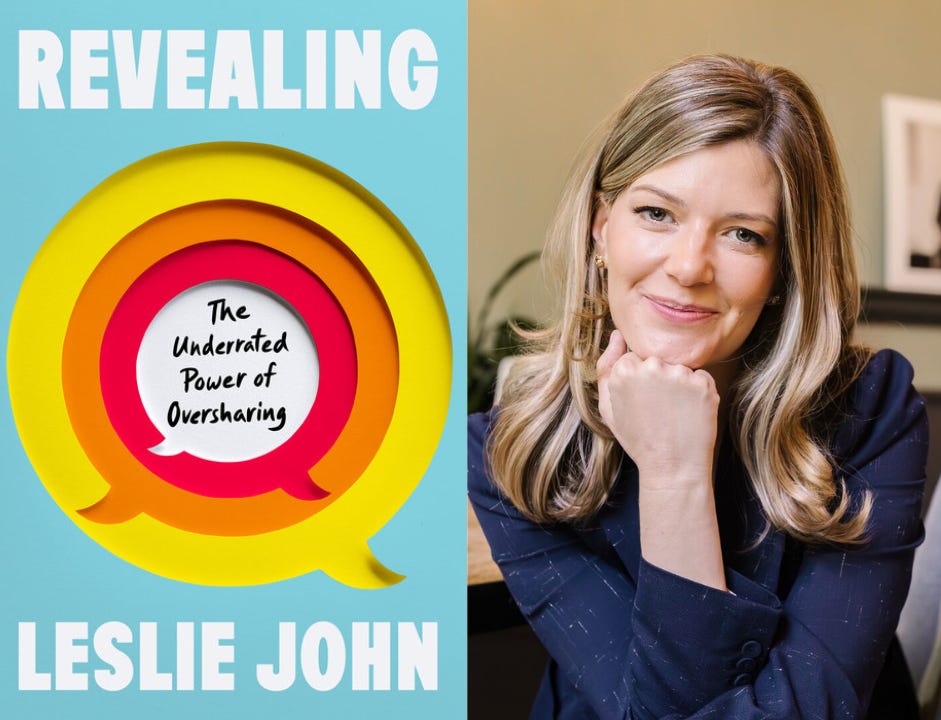
Leslie K. John is the James E. Burke Professor of Business Administration at Harvard Business School. Her research on privacy, self-disclosure, trust, and decision-making has been featured in The New York Times, The Wall Street Journal, The Economist, and NPR. Her recent book, Revealing: The Underrated Power of Oversharing, examines how sharing more about yourself can deepen relationships and improve well-being.
BCFG: In your recent book, Revealing, you argue that we under-share: we worry about disclosing too much when the greater risk is withholding information. What inspired you to write the book?
Leslie: In a cheeky study early in my academic career, I (along with my colleagues Alessandro Acquisti and George Loewenstein) easily tempted people to reveal embarrassing and even shameful information about themselves—cheating on a partner, driving drunk—on a questionnaire. As a privacy researcher attuned to the dangers of opening up on the internet, I tsk-tsked at our participants for oversharing and chalked it up to the thrill of revealing “naughty” things. But around this time, as I describe in Revealing, I was keeping a painful secret that trapped me and my partner in a mutually unsatisfying relationship. When I finally summoned up the courage to be honest, it became obvious just how much harm withholding can create. Through further reading, research, and experience, I learned we have much to gain from living a more open, authentic life—including through self-disclosure.
BCFG: What’s the core finding you hope readers take away from the book?
Leslie: I would love it if we would all spend just as much time considering the risks of not revealing as we do the risks of opening up. The well-documented omission bias tells us that we tend to focus more on the risks of action (such as revealing) than the risks of inaction (such as staying quiet). That’s because it’s all too easy to recall those painful times when we said or did something cringey or hurtful (like the multiple times I’ve accidentally told someone about their own surprise party)—but impossible to summon up the negative repercussions of things we didn’t do, because they didn’t happen!
In the long run, though, it’s the things we wish we’d said or done that tend to haunt us the most, as Thomas Gilovich’s research shows. Palliative care nurse Bronnie Ware observed this in her patients at the end of their lives. They expressed much more regret about words unspoken and paths not taken—such as not confessing their love to someone—than about disappointing or harmful actions they did take. That’s a poignant and urgent lesson for all of us.
BCFG: A 2018 study found that the majority of US adults admit to withholding medically relevant information from their clinicians, often out of embarrassment or fear of being judged. What can healthcare systems and providers do to encourage more honest disclosure from patients?
Leslie: In Revealing, I share hair-raising anecdotes from physicians who describe patients nearly dying on the operating table because they withheld vital information about their use of illegal or even legal but stigmatized (weight loss) drugs. As someone who lies like clockwork every six months about her flossing habits, I get it: We want so much for our doctors (and other impressive authority figures) to like us and view us as responsible adults!
There are a few ways that healthcare providers can prompt us to be more forthcoming. In one study of about 300 adults, similar to the study you cited, many of them admitted to lying to their doctors about their diet, exercise habits, and use of alcohol, drugs, and cigarettes. Younger adults, in particular, said they would prefer to answer questions about their drug and cigarette use in writing—as in an online questionnaire—than in person. They also predicted they would answer more honestly in writing. So, giving people the chance to reveal sensitive information in writing before an appointment might open up a more honest conversation in person.
Patients are often reluctant to reveal that they didn’t understand a clinician’s explanation or instructions. This happens in part because of a cognitive bias called the curse of knowledge: clinicians overestimate patient comprehension of medical information and leave patients feeling confused. To make sure they’re being understood, a clinician can ask a patient to repeat back what they just heard in their own words, a practice known as the Teach-Back Method.
Finally, clinicians might be able to induce honesty with some (metered, and thoughtful) disclosures of their own: “I personally am so busy these days that I’ve been eating more junk food than I’d like.” This practice capitalizes on the norm of reciprocity, or the widespread human tendency to respond to others in kind: If you’re vulnerable with me, I feel duty-bound to reciprocate.
BCFG: In a 2022 paper, you found that when leaders voluntarily reveal a weakness, employees rate them as more authentic, are more willing to work with them, and are most likely to trust them with financially consequential decisions. What does this suggest about the role of vulnerability in effective leadership?
Leslie: For our study, we had full-time professionals watch one of two versions of a video of an actual Google executive introducing himself, as if he were just meeting some new hires. In one version, the executive revealed (truthfully) that he had been rejected for 35 jobs before assuming his current position. In the other version, he didn’t reveal this history of failure. Participants reacted more positively, in the ways you described, when the executive revealed his struggles on the road to success.
We tend to see vulnerability as a sign of weakness. In reality, it requires confidence to admit our mistakes and failures. Others pick up on this confidence and find it inspiring.
That said, I always advise leaders to disclose with discretion. In another experiment, my colleagues and I looked at how people reacted to leaders who disclosed a fear of public speaking. When a leader said, “I get nervous before big presentations,” they were judged as authentic and competent. But when they revealed a more severe reaction—“I panic and my mouth goes dry”—participants started to question their leadership ability. You want to open up without raising questions about your stability and competence.
Many thanks to Leslie John for sharing her expertise with BCFG! Learn more about her research here. Her book is available here.
Selected New Journal Articles from BCFG Team Scientists
A Crowdsourced Megastudy of 12 Digital Single-Session Interventions for Depression in US Adults, co-authored by nearly 50 co-authors, including Team Scientist Jan Voelkel, Nature Human Behavior
Collective Streaks Motivate Prosocial Behavior, co-authored by David Levari and Team Scientist Michael Norton, Journal of Experimental Social Psychology
Persuading Large Language Models to Comply with Objectionable Requests, co-authored by Lennart Meincke, Dan Shapiro, Co-Director Angela Duckworth, Ethan Mollick, Lilach Mollick, and Team Scientists Christophe Van den Bulte and Robert Cialdini, Proceedings of the National Academy of Sciences
Setting Higher Referral Targets Increases the Number of Women Recommended: Evidence from the Field and Lab, co-authored by Team Scientists Aneesh Rai, Erika Kirgios, Co-Director Katy Milkman, and Brian Lucas, Journal of Applied Psychology
Spotlighted Podcasts
Death by Dashboard, featuring Team Scientist Shlomo Benartzi and hosted by Co-Director Katy Milkman, Choiceology
Do You Feel Loved?, featuring Team Scientist Greg Walton, Hidden Brain
The Psychology of Spending, Debt, and Budgeting, featuring Team Scientist Abigail Sussman, Speaking of Psychology
Don’t forget to follow us on social media, where we share new research, job postings, and more: LinkedIn / X / Facebook / BlueSky