
Does One Size Fit All for Behavioral Interventions?
New BCFG research explores this question

New BCFG Research Shows How Past Behavior Can Be Used to Select Future Nudges
If a person has (or hasn’t) previously shown a propensity for engaging in a given behavior, can that give a choice architect clues about the best nudge to use to engage them now? In new BCFG research led by UCLA PhD student Ilana Brody as well as UCLA Professor Hengchen Dai and CMU Professor Silvia Saccardo and published in Organizational Behavior and Human Decision Processes, we investigated this question in the context of flu vaccination.

Across an online experiment (N=2,602) and two field experiments with two health systems (N=14,760), and a large U.S. retail pharmacy chain (N=2,980,249), we tested whether people’s past flu-shot uptake predicts what kind of intervention works best. We evaluated (1) informational nudges designed to strengthen vaccination intentions and (2) follow-through interventions designed to help people act on vaccination intentions they already have. We examined both vaccination intentions and actual flu shot uptake.
What were the key takeaways from the research?
(1) Intervention effectiveness depended on prior behavior. Follow-through interventions—designed to make it easier for people to act on existing intentions—significantly increased flu shot uptake among individuals who had been vaccinated previously. These interventions did not produce a significant increase in vaccination uptake among those who hadn’t been vaccinated in the prior year.
(2) In contrast, information interventions—providing information about the flu and the flu vaccine—primarily increased vaccination intentions among those who had not gotten the flu shot the prior year.
(3) Different people often face different barriers to action. Prior behavior can help identify whether someone needs a nudge to follow through (when an intention to act already exists) or help forming intentions in the first place (when a decision about whether to act has not yet been made).
Who contributed to this project?
Ilana Brody (UCLA PhD student) led this project with excellent mentorship from BCFG Team Scientists Hengchen Dai (UCLA) and Silvia Saccardo (Carnegie Mellon). Co-authors on this project included BCFG Co-Directors Katy Milkman and Angela Duckworth (Penn), BCFG Executive Director Dena Gromet (Penn), and BCFG Team Scientist Mitesh Patel (Ascension Health).
Emily Oster on Science Communication
Over 400 people tuned in for a virtual keynote Q&A featuring Emily Oster, Brown University economist, New York Times Bestselling Author, and CEO of ParentData. Professor Oster shared practical insights on communicating about science to broad audiences—including about nuanced and controversial topics. Watch the recording.
New Books By BCFG Team Scientists
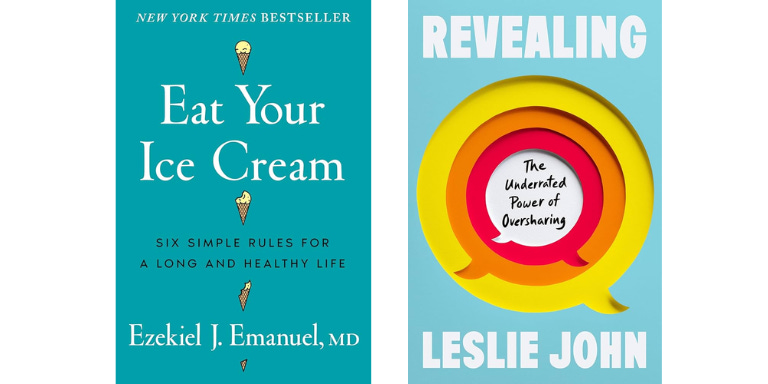
Eat Your Ice Cream: Six Simple Rules for a Long and Healthy Life by Ezekiel Emanuel
Revealing: The Underrated Power of Oversharing by Leslie John
Both Katy Milkman and Angela Duckworth Closed Out 2025 with Appearances on The Mel Robbins Podcast
BCFG Co-Director Katy Milkman shared insights from her research on how to create lasting behavior change.
BCFG Co-Director Angela Duckworth shared insights from her research on grit.
Spotlighted Press

People Are Panic Buying for the Winter Storm. An Expert Explains Why We Do It, featuring Team Scientist Ravi Dhar, TIME
Willpower Doesn’t Work. This Does., essay by Co-Director Angela Duckworth, The New York Times
The Upside of Professional Rejection, featuring Team Scientist Ayelet Fishbach, The Atlantic
Here’s How to Make Resolutions Stick, According to a Behavior Change Scientist, featuring Co-Director Katy Milkman, The Washington Post
Don’t forget to follow us on social media, where we share new research, job postings, and more: LinkedIn / X / Facebook / BlueSky